How to trade meme coins like a full-time Solana scalper without blowing up your account
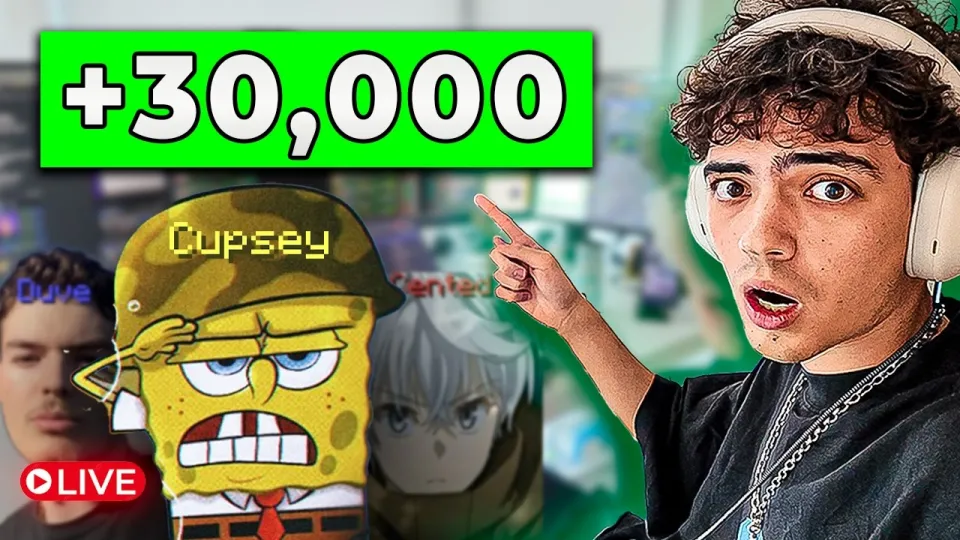
Video: I Traded With The World’s #1 Memecoin Trader
Need articles like this for your video? They help promote it on YouTube and Google — order them in the Telegram bot @sat_sit_bot. Articles with your video embedded are written and posted by the bot itself — on popular topical sites (no ads). Free trial — 50 articles.
· based on the channel Ethan Prosper
Meme coin trading is short-term speculation on tokens with no cash flow, no product and no fundamental valuation — you profit only if someone buys higher than you did, so the skill is in entries, exits and risk control rather than in picking a "good" project. The practical version: pick a liquid chain such as Solana, use a fast terminal like Padre, size every position so a total loss is survivable, and sell into strength instead of hoping for a 100x. The session in Ethan Prosper's video with trader Cupsey shows what that looks like at the extreme end — several hundred SOL moved in a single sitting.
What the Cupsey session actually shows about meme coin trading
The video is a live trading session, not a lecture: two traders sit at terminals and rotate through fresh Solana pairs while narrating entries and exits. The chapters track trades on Lobo, a token called 1%, Cheese Coin, an Elon/Grok-themed coin, Magic Internet Money and Mosaic AI, with results in the range of +200 SOL on the opening trades, roughly +$15K on the Grok-themed position and around +80 SOL on Mosaic. Those numbers are the headline, but the mechanics behind them matter more: small market caps, minutes-long holding periods, and constant rotation out of positions that stop moving.
What you do not see in a highlight reel is the failure rate. Speed trading fresh pairs is the hardest style in crypto because liquidity is thin, the order book is mostly other bots, and a single dev wallet dumping can wipe a chart in seconds. Treat the session as a demonstration of process — screen setup, wallet discipline, fast exits — rather than a template you can copy with a 2 SOL bankroll.
Setting up a wallet and terminal for meme coin trading
A workable meme coin setup is three pieces: a hot wallet with only trading capital, a terminal that executes swaps in one click, and a second screen or device for charts and socials. Everything else is optional.
- Create a fresh Solana wallet dedicated to trading. Never connect a wallet that holds long-term holdings or NFTs to launchpad and terminal sites.
- Fund it with an amount you can lose entirely. The traders in the video work with hundreds of SOL; most beginners should start with a fraction of a single SOL to learn the interface.
- Connect the wallet to a terminal such as Padre, which bundles charting, quick buy/sell buttons and preset slippage in one screen.
- Set slippage deliberately. On brand-new pairs with thin liquidity, low slippage means failed transactions; on established pairs, high slippage means you get filled at a terrible price.
- Set a default priority fee so transactions land during congestion — a swap that confirms 30 seconds late is a different trade.
- Test with a tiny buy and a tiny sell before you size up. Confirm you can actually exit, not just enter.
Keep the seed phrase offline, and consider a separate "burner" wallet per strategy so a compromised site cannot drain your main trading stack.
Position sizing and exit rules that keep you in the game
The single biggest determinant of survival in meme coin trading is position size, not token selection. If one bad trade can remove 30% of your bankroll, you will eventually be forced out of the market by normal variance.
- Cap single-trade risk at 1–3% of your trading stack. With a 10 SOL stack, that is 0.1–0.3 SOL per fresh launch.
- Scale with conviction, not with hope. Add only after the position is already green and the chart structure holds.
- Take partials on the way up. Selling half at 2x removes the emotional pressure that turns winners into losers.
- Predefine invalidation. If the thesis was "dev is active and holders are growing" and the dev wallet starts selling, exit — do not average down into a rug.
- Cap the number of open positions. Three to five is already hard to monitor; the traders in the video rotate fast precisely because they watch one chart at a time.
A simple journal — token, entry market cap, exit market cap, reason for exit — will teach you more in 50 trades than any thread on X.
How to screen new Solana pairs without chasing every launch
Screening is filtering, not finding: you want to reject 95% of launches in under a minute. On Pump.fun and similar launchpads, the useful signals are boring and mechanical.
- Liquidity and holder count. A pair with a few thousand dollars of liquidity cannot absorb your sell order without moving the price against you.
- Dev and sniper wallets. Check whether the deployer still holds a large share and whether the first buyers are clustered wallets — that pattern usually means one entity controls the float.
- Social footprint. A real community produces consistent, organic posts; a bought raid produces identical messages from accounts created the same week.
- Chart structure. Higher lows and rising volume after the initial launch spike are healthier than a single vertical candle that immediately retraces.
- Narrative fit. Coins tied to a live event or a well-known figure move faster, but they also die faster once the news cycle passes.
The Elon/Grok-themed trade in the video is a textbook example of narrative-driven flow: the token pumped on attention, and the exit mattered more than the entry.
The uncomfortable questions viewers ask about meme coin trading
Most of the skepticism around videos like this one is justified, and it deserves direct answers rather than hype. The recurring doubts are about multi-wallet manipulation, about whether anyone can replicate these results, and about what happens to the people on the other side of the trade.
- "Aren't these traders just multi-walleting and dumping on retail?" Some participants in the space do run wallet clusters, and that is exactly why you should check holder distribution before buying. You cannot control others' behavior; you can refuse to be the exit liquidity for a wallet cluster you can see on-chain.
- "Can I do this with 1–2 SOL?" You can learn the mechanics, but fees, priority tips and failed transactions eat a disproportionate share of a tiny stack. Treat small capital as tuition, not as an income plan.
- "Do I have to trade this fast?" No. The most common advice from experienced traders is that this is the hardest style available — longer holds on larger, more liquid coins are a legitimate alternative with a far gentler learning curve.
- "What is a faucet in this context?" In trading streams the term usually refers to small free distributions or test funds that let you try a tool or chain without depositing; it is not a source of meaningful capital.
- "How much time does it take?" The traders in these sessions are at the screen for many hours a day, every day. If you cannot commit that time, do not use their style as your benchmark.
Managing the psychology of fast meme coin trades
Speed trading is mostly an emotional discipline problem wearing a technical costume. The chart does not care about your last loss, but your hands do.
Set hard rules before the session starts: maximum daily loss, maximum number of trades, and a fixed time to stop. After a large win, the temptation is to size up immediately — that is when most traders give back the day's profit. After a large loss, the temptation is to revenge-trade a worse setup. Both impulses are predictable, which means both can be pre-empted with a written checklist. The traders in the video operate on reflexes built over thousands of repetitions; you will not have those reflexes on day one, and pretending otherwise is how accounts die.
Useful links
- Padre trading terminal — the terminal used for the session, with charting and one-click execution
- https://ethanprosper.com — Ethan Prosper's link hub
- https://x.com/cupseyy — Cupsey on X
- https://discord.gg/solmafia — free SOLMAFIA Discord community
- https://www.joinpastel.com/r/ref=ETHAN — Pastel paid community
Bottom line
The session Ethan Prosper recorded with Cupsey is a useful look at how professional-speed meme coin traders actually operate: dedicated wallets, fast terminals, small positions relative to their stack, and exits taken without sentiment. The 350+ SOL and five-figure results are real for them, but they are the output of a full-time, high-risk process that most people should not attempt with rent money. If you want to try the style, start on Padre with a bankroll you can lose, journal every trade, and accept that the first hundred trades are education rather than income. For a wider audience, the smarter takeaway is the discipline — sizing, invalidation, partials — applied to larger and more liquid assets.
Key takeaways
- A single session in the Ethan Prosper video with trader Cupsey produced roughly 350+ SOL in combined results across a handful of trades
- The style shown is ultra-short-term Solana scalping on fresh pairs, not long-term holding of a meme coin
- Tools named in the video include the Padre terminal (trade.padre.gg), Pump.fun launches and Axiom-style trading terminals
- Trades covered include Lobo, Cheese Coin, an Elon/Grok-themed token, Magic Internet Money and Mosaic AI
- Most viewers watching this style will lose money: speed trading is a full-time job, and larger, more liquid coins are a safer learning ground
Questions & answers
How much money do you need to start trading meme coins?
You can start with a fraction of a SOL to learn the interface, but treat that as tuition rather than an income plan. Fees, priority tips and failed transactions eat a large share of a tiny stack, so most beginners are better off practising on paper or with minimal size until the process is familiar.
Is meme coin trading the same as investing in a meme coin?
No. Investing implies holding a position over weeks or months on a thesis about community and adoption; the style shown in the video is minutes-long scalping on fresh Solana pairs. Scalping depends on execution speed and exit discipline, while holding depends on surviving drawdowns — the two require different rules and different position sizes.
What tools do the traders in the video use?
They work from a Solana wallet connected to a fast trading terminal — Padre is the one linked in the video — alongside launchpad data from Pump.fun and social feeds on X. The terminal matters mainly for execution speed and preset slippage, not for picking which token to buy.
Why do so many people lose money trading meme coins?
Because the market is dominated by participants with faster tools, more capital and pre-built wallet clusters, and because thin liquidity means exits are worse than entries. Add emotional sizing after wins and revenge trading after losses, and the average retail result is predictable — which is why strict position limits and predefined invalidation matter more than any single pick.
Source: I Traded With The World’s #1 Memecoin Trader · Markdown version